Introduction
Overview
Teaching: 0 min
Exercises: 0 minQuestions
What is FAIR software?
Why FAIR software?
How do I make software FAIR?
Objectives
Know what FAIR software is
Understand the benefits of making software FAIR
Describe five recommendations for FAIR software
Know the FAIR software website
What is FAIR?
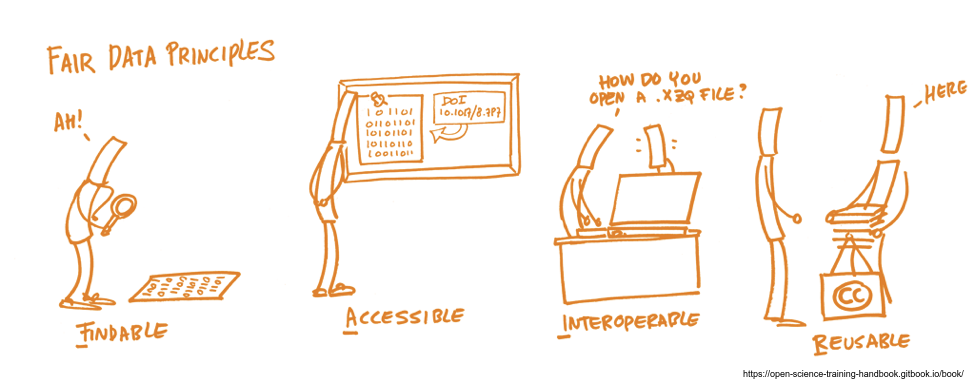
FAIR stands for Findable, Accessible, Interoperable and Reusable. The FAIR principles are originated in data management and have served as a flagship for promoting good data management practices. However, only recently, the principles have been applied to software.
In general, central to the realization of FAIR are FAIR Digital Objects, which may represent data, software or other research resources.
Five recommendations for FAIR software
This lesson introduces the five recommendations on how to make research software more FAIR. The five recommendations presented on the fair-software.eu website are:
- Use a publicly accessible repository with version control.
- Add a license.
- Register your code in a community registry.
- Enable citation of the software.
- Use a software quality checklist.
Key Points
The five recommendations make your code more Findable, Accessible, Interoperable and Reusable.